Laparoscopic Surgery: Common Conditions That May Need Minimally Invasive Care
palvia on 30 September, 2026 | Comments Off on Laparoscopic Surgery: Common Conditions That May Need Minimally Invasive Care
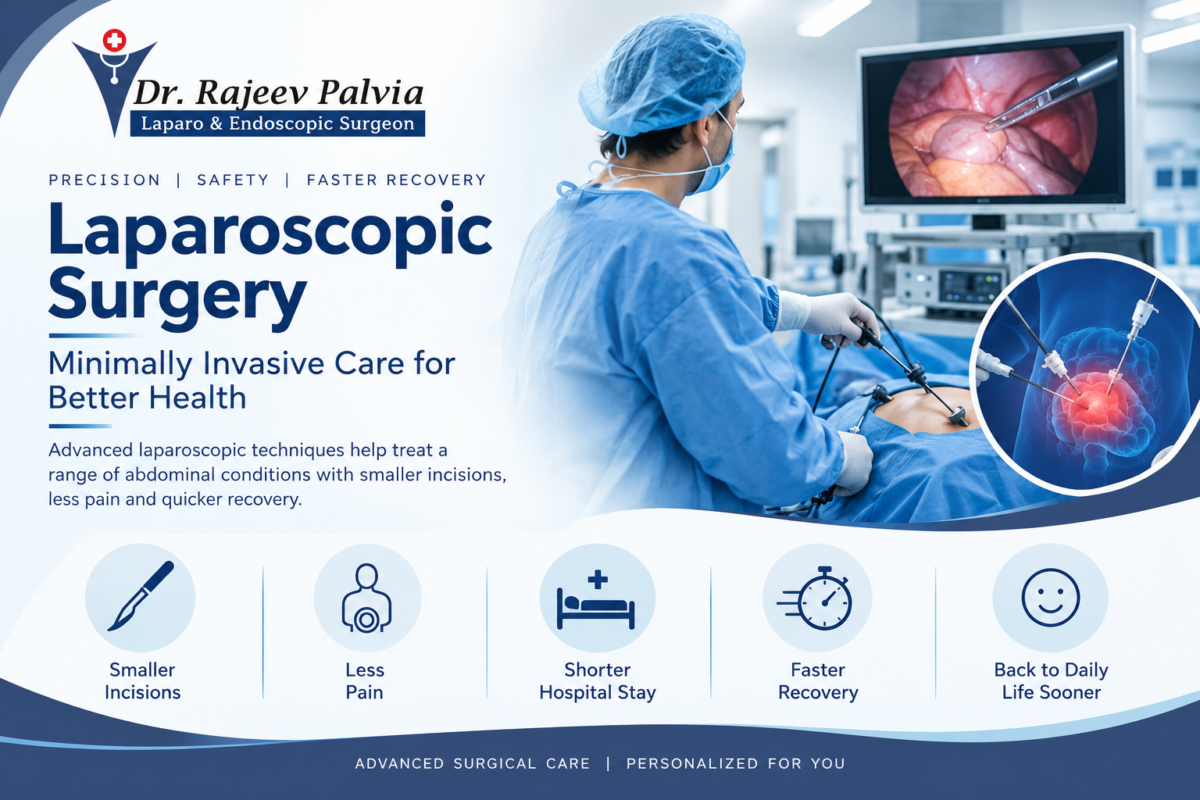
Surgery does not always have to involve a large incision. Advances in surgical techniques have made it possible to treat many abdominal conditions through smaller openings using a camera and specialised instruments. This method is known as laparoscopic surgery. Laparoscopic Surgery in Kharghar is the focus of this on-page blog, covering how the procedure works, the conditions for which it may be considered, and what patients can expect before and after treatment. The service is provided by Dr. Rajeev Palvia, a Laparo & Endoscopic Surgeon.
What Is Laparoscopic Surgery?
Laparoscopic surgery is a minimally invasive technique used to examine or treat problems inside the abdomen. Instead of making one large incision, the surgeon generally creates small openings through which a camera and fine surgical instruments can be introduced.
The camera sends magnified images to a monitor, giving the surgeon a clear view of the area being treated. Specialised instruments can then be used to perform the required surgical steps.
The precise procedure depends on the patient’s diagnosis. Laparoscopy may be appropriate for certain abdominal and gastrointestinal conditions, but it is not automatically suitable for every patient. Factors such as the nature of the condition, previous surgeries, general health and findings from diagnostic tests are considered before a treatment plan is selected.
Which Conditions May Need Laparoscopic Treatment?
One reason Laparoscopic Surgery in Kharghar is used in modern surgical care is its application across different abdominal conditions. Depending on the patient’s individual circumstances, laparoscopic techniques may be considered for gallbladder problems, appendicitis, selected hernias and certain gastrointestinal or abdominal conditions.
Gallbladder surgery is one example where laparoscopic techniques are commonly used. Similarly, some patients with appendicitis may be candidates for a minimally invasive procedure after proper assessment.
The choice of technique should always be based on the specific condition rather than simply on a preference for minimally invasive surgery. In some situations, conventional open surgery may be more appropriate.
What Are the Potential Advantages?
A major feature of laparoscopic surgery is the use of smaller surgical openings. Compared with many open procedures, this can mean less disruption to the abdominal wall.
Depending on the operation and the patient’s condition, potential advantages may include smaller scars, less discomfort around the surgical site, a shorter hospital stay and a quicker return to everyday activities. These benefits can vary considerably between procedures and individuals.
It is important to remember that laparoscopic surgery is still a type of surgery. It carries potential risks, and the expected benefits and possible complications should be discussed with the treating surgeon before a procedure is planned.
How Does a Laparoscopic Surgeon Evaluate a Patient?
A Laparoscopic Surgeon in Kharghar begins by understanding the patient’s symptoms rather than immediately deciding on surgery. A consultation may include a review of medical history, previous operations, current medicines and any existing health conditions.
A physical examination is generally followed by appropriate investigations when required. Depending on the symptoms, these may include blood tests, ultrasound, CT imaging or other diagnostic examinations.
The results help the surgeon understand the underlying problem and determine whether surgery is necessary. If an operation is recommended, the surgeon can explain the available approaches and why a particular technique may be suitable.
Preparing for Laparoscopic Surgery
Before Laparoscopic Surgery in Kharghar, patients generally receive instructions based on the procedure and type of anaesthesia planned. These instructions may include when to stop eating or drinking, how to manage regular medicines and what investigations need to be completed beforehand.
Patients should also inform the medical team about existing medical conditions, allergies and medicines they regularly take. Having this information available allows the surgical team to plan care according to the individual’s circumstances.
A consultation is also an opportunity to ask practical questions about the procedure, expected hospital stay, recovery, activity restrictions and follow-up.
For conditions that require a broader surgical evaluation, general surgery care in Kharghar provides information about the surgical care available through the practice.
What Is Recovery Like?
Recovery after Laparoscopic Surgery in Kharghar is influenced by the type of operation performed and the patient’s overall health. A relatively straightforward procedure may have a different recovery pattern from a more complex abdominal operation.
During the initial recovery period, patients may experience tiredness, mild soreness around the incision sites or temporary changes in their usual routine. Following wound-care, medication, dietary and activity instructions can support the recovery process.
Although laparoscopic procedures use smaller openings, patients should not assume that the body has completely healed as soon as they feel better. Internal healing takes time. The treating surgeon can advise when normal exercise, lifting and other activities can be resumed.
When Should You See a Surgeon?
Ongoing abdominal pain, repeated digestive discomfort, unexplained swelling or symptoms associated with conditions such as gallbladder disease or appendicitis should not be ignored. The cause of abdominal symptoms can vary, so self-diagnosis may not provide a clear answer.
A Laparoscopic Surgeon in Kharghar can assess the symptoms and recommend appropriate investigations before deciding whether surgery is needed. Treatment may involve observation, medication or surgery depending on the diagnosis.
For patients being evaluated for appendix-related problems, information about appendix surgery in Kharghar can also help explain the surgical approach and treatment considerations.
Understanding the Role of Personalised Surgical Care
There is no single surgical method that works for every abdominal condition. Laparoscopic Surgery in Kharghar can be an option for appropriately selected patients, but the decision depends on the diagnosis, medical history, imaging findings and overall health.
A careful evaluation helps the surgeon decide whether minimally invasive surgery is appropriate or whether another treatment approach would be more suitable. Discussing the procedure, expected recovery and possible risks beforehand can help patients make informed decisions about their care.
Frequently Asked Questions
1. What is laparoscopic surgery?
Laparoscopic surgery is a minimally invasive surgical technique that uses small openings, a camera and specialised instruments to treat selected conditions inside the abdomen.
2. Which conditions can be treated using laparoscopy?
Depending on the individual case, laparoscopic techniques may be considered for gallbladder problems, appendix conditions, selected hernias and certain gastrointestinal or abdominal conditions.
3. Does laparoscopic surgery always mean a shorter recovery?
Not necessarily. Recovery depends on the procedure, the patient’s health, the complexity of the condition and whether any complications occur.
4. Will laparoscopic surgery leave scars?
Small incisions are generally used, so the resulting scars may be smaller than those associated with some open procedures. Their appearance can vary between individuals.
5. How can I know whether I am suitable for laparoscopic surgery?
A surgeon needs to evaluate your symptoms, medical history, examination findings and diagnostic reports. Based on these factors, the appropriate treatment approach can be discussed.