Piles vs Fissure vs Fistula: Symptoms, Differences & How to Identify Your Problem Early
palvia on 19 January, 2026 | No Comments
If you’ve ever felt pain, burning, or noticed bleeding while using the toilet, you’re not alone. These symptoms are far more common than people admit. Most patients assume it’s piles and try home remedies, hoping the problem will disappear on its own.
But here’s the reality: piles, fissure, and fistula are three different conditions, and confusing one for another can delay the right treatment. Early identification makes a huge difference especially for people searching for reliable piles treatment in Kharghar and nearby areas.
Let’s talk about these conditions in a simple, honest, and practical way.
Why Do Piles, Fissure, and Fistula Feel So Similar?
All three conditions affect the anal region, which is why symptoms often overlap. Pain during bowel movements, bleeding, itching, or discomfort while sitting are common complaints.
Because of embarrassment or fear, many people delay visiting a doctor. Unfortunately, this delay often turns a manageable condition into a painful, long-term problem requiring surgery. Knowing the difference early can save time, pain, and complications.
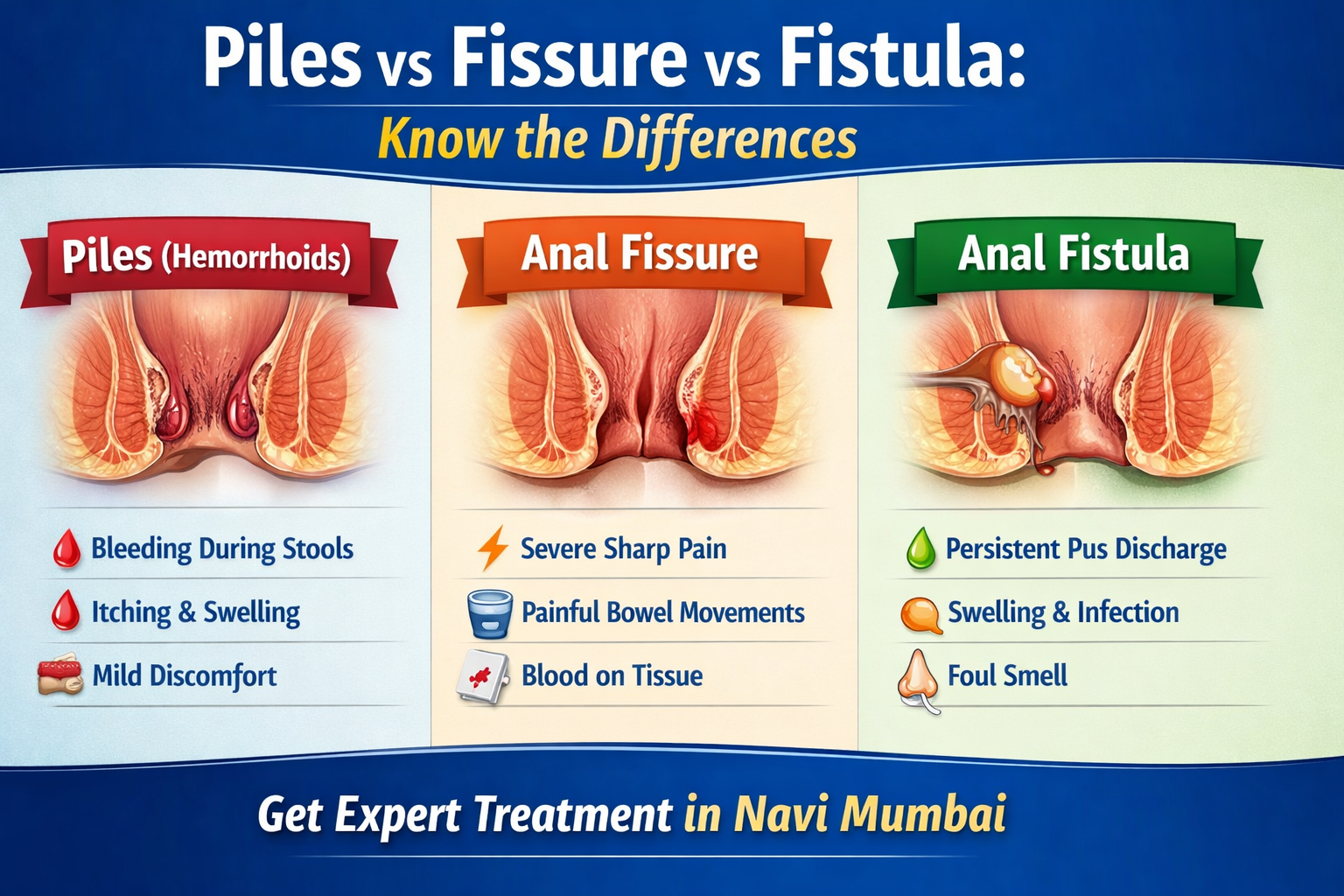
What Are Piles (Hemorrhoids)?
Piles occur when veins inside or around the anus become swollen due to increased pressure. Constipation, straining, long sitting hours, and poor lifestyle habits are common triggers.
You may be dealing with piles if:
- You notice bright red blood during or after stools
- There is itching or irritation around the anus
- You feel a soft lump or swelling
- Pain is mild or absent in the early stage
Early piles respond very well to lifestyle changes and medical care.
What Is an Anal Fissure?
An anal fissure is a small tear in the anal lining, usually caused by passing hard or large stools.
Common fissure symptoms include:
- Sharp, cutting pain during bowel movements
- Pain that lasts for hours afterward
- Small blood stains on tissue paper
- Fear of using the toilet due to pain
Unlike piles, fissure pain is intense and immediate. Without proper treatment, an acute fissure can turn chronic and more difficult to manage.
What Is an Anal Fistula?
Anal fistula is a more serious condition that usually develops after an untreated anal infection or abscess. It forms an abnormal tunnel between the anal canal and the skin.
Signs that strongly suggest fistula:
- Continuous pus or fluid discharge
- Recurrent boils or swelling near the anus
- Foul smell or constant wetness
- Fever or weakness in advanced cases
Fistula does not heal with medicines alone. Most cases require surgical intervention, which is why early diagnosis is crucial for anyone seeking piles fissure fistula treatment in Navi Mumbai.
Piles vs Fissure vs Fistula: How to Tell the Difference
A simple way to understand:
- Bleeding with little pain → Likely piles
- Severe pain during and after stools → Likely fissure
- Pus discharge or repeated infection → Likely fistula
Although this gives a basic idea, only a proper medical examination can confirm the diagnosis.
Why Early Treatment Matters
One of the biggest mistakes patients make is waiting too long. What starts as a minor issue can become a chronic condition requiring surgery. Many people search for treatment only when daily life becomes uncomfortable.
Early consultation helps with:
- Faster relief from pain
- Lower risk of infection
- Simpler treatment options
- Better long-term outcomes
When Should You See a Doctor Immediately?
Don’t ignore symptoms like:
- Persistent bleeding
- Severe or increasing pain
- Pus discharge or swelling
- Symptoms lasting more than a week
These signs indicate that medical attention is necessary.
Final Thoughts
Piles, fissure, and fistula may sound similar, but they are very different conditions. Understanding the symptoms and differences helps you take action early before the problem gets worse.
If you’re experiencing discomfort or are unsure about your symptoms, consulting an experienced specialist like Dr. Rajeev Palvia can help you get the right diagnosis and the most effective treatment at the right time.
Early care means less pain, quicker recovery, and peace of mind.