Asthma Diagnosis and Treatment: A Complete Patient Guide
palvia on 23 September, 2026 | Comments Off on Asthma Diagnosis and Treatment: A Complete Patient Guide
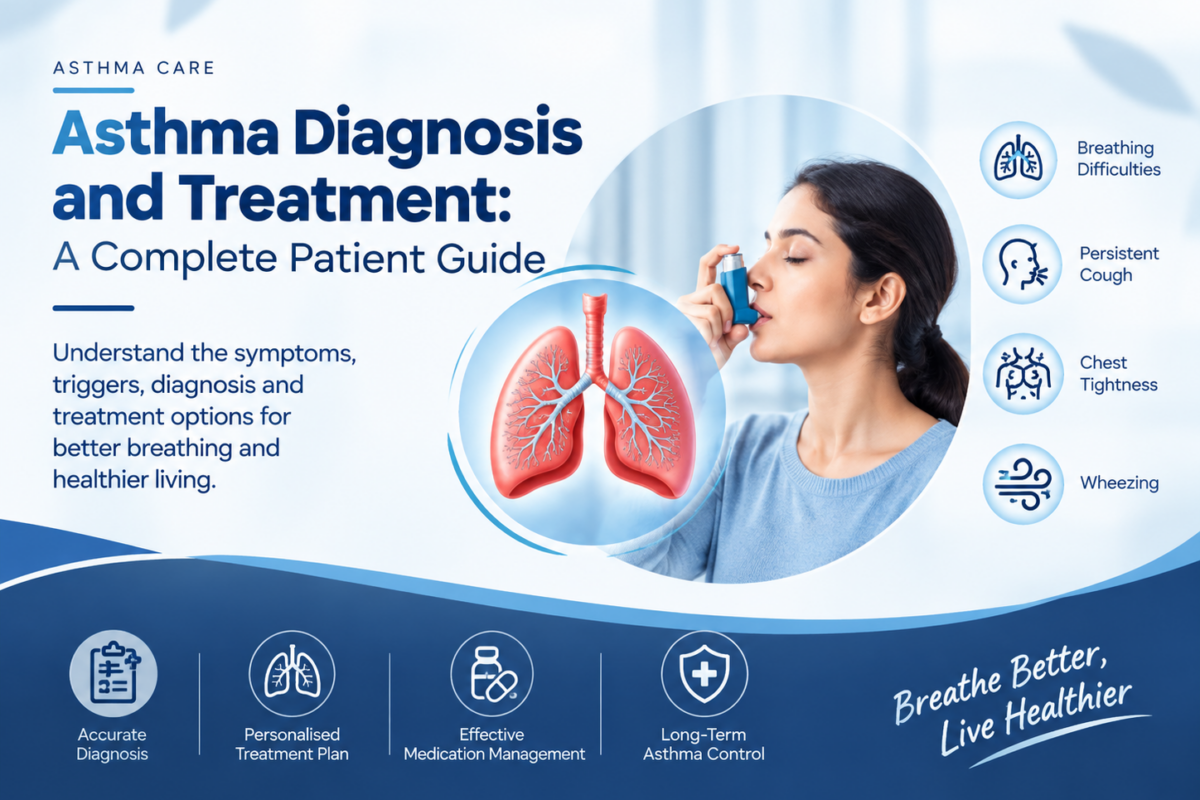
Asthma is a condition that affects the airways and can make breathing difficult. The airways may become swollen and narrow, making it harder for air to pass through. This can cause symptoms such as coughing, wheezing, chest tightness, and shortness of breath.
At Dr. Anjali Palvia’s medical practice in Kharghar, asthma care focuses on identifying possible triggers, creating personalised treatment plans, managing medications appropriately, and helping patients understand self-management techniques. The practice also emphasises ongoing monitoring and follow-up care as part of its approach to asthma management.
What Is Asthma?
Asthma is an inflammatory disease of the airways that can lead to variable and recurring respiratory symptoms. During an episode, the airways may become narrowed, making it harder for air to move normally. This can result in symptoms such as wheezing, coughing, chest tightness, and breathlessness.
Asthma symptoms may not remain constant. Some people experience occasional symptoms, while others may have more frequent problems. Recognising changes in breathing patterns and discussing recurring symptoms with a healthcare professional can help with appropriate evaluation and management.
What Are the Common Symptoms of Asthma?
Asthma can present differently among individuals, but some symptoms are commonly associated with the condition. These include:
- Wheezing while breathing
- Persistent or recurring cough
- A feeling of tightness in the chest
- Shortness of breath
- Episodes of breathing difficulty
- Symptoms that come and go over time
The presence and extremity of these symptoms can vary person to person. If breathing problems repeatedly occur or begin affecting normal activities, medical evaluation can help determine whether asthma or another respiratory condition may be responsible.
How Is Asthma Diagnosed?
Diagnosis generally begins with a detailed discussion of the patient’s symptoms and medical history. A healthcare professional may ask about the frequency of breathing difficulties, possible triggers, previous episodes, and how symptoms affect daily activities.
A comprehensive evaluation can help distinguish asthma from other conditions that may produce similar respiratory symptoms. The asthma care information provided by the practice highlights comprehensive evaluation and accurate diagnosis as important parts of its services.
Patients looking for Asthma Treatment in Kharghar can benefit from discussing recurring symptoms rather than relying only on temporary relief. A proper assessment can help establish an individualised management plan.
What Can Trigger Asthma Symptoms?
Asthma symptoms may be associated with different environmental or individual factors. Potential triggers can vary between patients, which is why identifying personal patterns can be useful.
Some people may notice symptoms after exposure to particular environmental conditions, while others may experience breathing difficulties during certain activities or situations. Keeping track of when symptoms occur can provide useful information during a consultation.
The asthma management program at Dr. Anjali Palvia’s practice specifically focuses on identifying triggers and educating patients about self-management.
How Is Asthma Treated?
Asthma treatment is generally tailored according to the patient’s symptoms, medical history, and individual needs. Medication management can form an important part of care, while education about self-management can help patients understand how to manage their condition as advised by their healthcare professional.
A personalised approach is important because asthma does not affect every patient in exactly the same way. Treatment may also require periodic review when symptoms or circumstances change.
For patients seeking an Asthma Specialist in Kharghar, discussing symptom patterns, possible triggers, current medications, and previous treatment experiences can help the doctor develop an appropriate care plan.
Why Is Ongoing Asthma Management Important?
Asthma care is not limited to the initial consultation. Symptoms can change over time, making regular monitoring and follow-up useful. The asthma services described by the practice include ongoing monitoring, follow-up care, and patient education.
Patients can also benefit from understanding their own symptoms and knowing what situations may worsen their breathing. Following the treatment plan provided by the healthcare professional and attending recommended follow-ups can support long-term asthma management.
When asthma occurs alongside other medical concerns, comprehensive physician care can be particularly useful. For example, conditions such as hypertension may require their own evaluation and ongoing management, which can be discussed through the practice’s hypertension treatment service.
When Should You Consult an Asthma Specialist?
Recurring wheezing, coughing, chest tightness, or breathlessness should not be ignored, especially when symptoms interfere with daily activities or repeatedly return. A consultation can help determine whether the symptoms are associated with asthma or another medical condition.
Choosing Asthma Treatment in Kharghar involves more than addressing individual symptoms. A complete approach may include evaluation, trigger identification, personalised treatment, medication management, education, and follow-up care.
Similarly, an Asthma Specialist in Kharghar can help patients understand their symptoms and discuss appropriate treatment and self-management options based on their individual needs.
At Dr. Anjali Palvia’s practice, personalised medical care is combined with patient education and follow-up support. The practice is located in Kharghar, Navi Mumbai, and provides medical services for asthma along with other physician-led healthcare needs.
Conclusion
Asthma can affect breathing in different ways, with symptoms ranging from wheezing and coughing to chest tightness and shortness of breath. Understanding the condition, identifying potential triggers, and receiving an appropriate treatment plan are important aspects of managing asthma. Regular follow-up and patient education can also help individuals understand their symptoms and follow their recommended care plan. If recurring breathing difficulties are affecting everyday life, discussing them with a qualified healthcare professional can be an important step toward appropriate evaluation and management.
FAQs
1. What are the common symptoms of asthma?
Asthma can make it harder to breathe and may cause coughing, wheezing, chest tightness, or shortness of breath. Some people may have mild symptoms, while others may experience them more often or more strongly.
2. How is asthma diagnosed?
Asthma evaluation generally involves discussing symptoms and medical history. A healthcare professional may recommend further assessment depending on the symptoms and individual circumstances.
3. Can asthma symptoms vary from person to person?
Yes. Asthma is characterised by variable and recurring symptoms, so individuals may experience different patterns and levels of breathing difficulty.
4. Why is identifying asthma triggers important?
Identifying possible triggers can help patients understand when symptoms occur and support the development of an appropriate personalised management plan.
5. Does asthma require regular follow-up?
Ongoing monitoring and follow-up may be part of asthma management. Regular medical reviews can help assess symptoms and treatment needs over time.