Can a Burst Appendix Affect Your Intestines? Understanding Appendix Treatment in Kharghar
palvia on 31 July, 2026 | Comments Off on Can a Burst Appendix Affect Your Intestines? Understanding Appendix Treatment in Kharghar
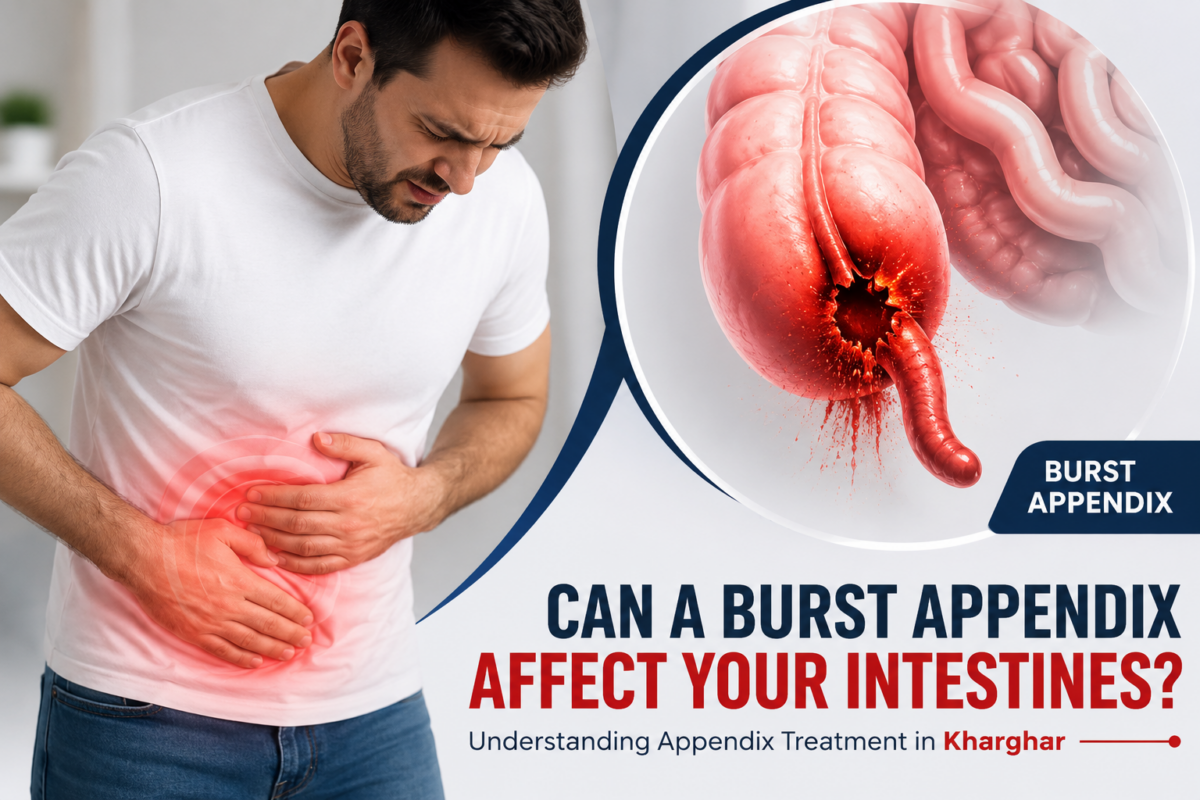
Appendicitis can sometimes begin with symptoms that seem easy to ignore, such as stomach pain, nausea, or a reduced appetite. However, when the appendix becomes increasingly inflamed and treatment is delayed, it may rupture. A burst appendix can cause infection to spread within the abdomen and, in severe cases, may affect the tissues surrounding the intestine.
For those searching for Appendix Surgery in Kharghar, understanding the possible effects of a ruptured appendix can help highlight why timely diagnosis and treatment are important. Consulting an experienced specialist like Dr. Rajeev Palvia can also help patients understand their treatment options based on their individual condition.
What Happens When an Appendix Bursts?
The appendix is a small, narrow pouch attached to the first part of the large intestine. Appendicitis occurs when the appendix becomes inflamed, often due to a blockage or infection. Without appropriate treatment, the inflammation can become more severe and eventually cause the appendix wall to rupture.
Once the appendix bursts, its infected contents may leak into the surrounding abdominal area. This can lead to complications such as peritonitis or an abscess. Depending on how advanced the infection is, Appendicitis Treatment in Kharghar may involve urgent medical care, antibiotics, drainage, or surgery.
Can a Burst Appendix Affect Your Intestines?
A ruptured appendix does not automatically mean that a part of the intestine must be removed. In most situations, treatment focuses on removing the appendix and controlling the infection.
However, the appendix is located close to the large intestine. If infection and inflammation become extensive, the surrounding tissues may also become severely affected. In very rare and complicated cases, the infection may cause enough damage to a section of the intestine that the surgeon needs to remove that damaged portion.
This is not something that happens during routine appendix removal. An experienced Appendix Surgeon in Kharghar will assess the extent of infection and inflammation and choose the safest treatment based on the patient’s condition.
Symptoms You Should Never Ignore
Appendicitis symptoms can vary from person to person, but some signs should not be ignored:
- Abdominal pain that becomes stronger or persistent
- Pain that moves towards the lower right side of the abdomen
- Fever or chills
- Nausea or vomiting
- Loss of appetite
- Increased abdominal tenderness or swelling
These symptoms may have different causes, so a proper medical assessment is essential. Early diagnosis can help prevent the condition from progressing to a more complicated stage.
When Is Appendix Surgery Recommended?
An appendectomy, or appendix removal surgery, is commonly recommended when appendicitis is diagnosed, and the appendix is significantly inflamed. Surgery may also be necessary when there is a high risk of rupture or when the appendix has already burst.
Depending on the patient’s health and the severity of the condition, Appendix Surgery in Kharghar may be performed using a laparoscopic technique. This approach uses small incisions and a camera-assisted procedure to remove the appendix.
The right treatment is not the same for every patient. The severity of inflammation, presence of infection, and whether the appendix has ruptured are all considered when planning the treatment.
What If the Appendix Has Already Ruptured?
When an appendix has burst, treatment depends largely on how much infection has spread and whether complications have developed. The medical team may use a combination of treatments to bring the infection under control.
Depending on the situation, treatment may include:
- Removing the ruptured appendix
- Cleaning infected material from the abdominal area
- Prescribing antibiotics
- Draining an abscess if one has developed
If the infection has caused severe inflammation near the intestine, the surgery may be more complicated. An experienced specialist can evaluate the affected area and decide whether any additional procedure is needed.
Importantly, a ruptured appendix does not automatically require intestinal removal. Whenever possible, surgeons aim to preserve healthy intestinal tissue.
Is Intestinal Removal Common During Appendix Surgery?
No. Removing a section of the intestine is not part of routine appendix removal. The primary objective is generally to remove the diseased appendix and manage the infection while preserving the surrounding healthy organs and tissues.
Only in unusual cases, where severe infection or inflammation has caused significant damage to nearby intestinal tissue, might removal of a small section become necessary. The decision depends entirely on the extent of the damage found during treatment.
Why Early Treatment Is Important
Ignoring persistent abdominal pain or delaying medical attention can allow appendicitis to become more serious. Once the appendix ruptures, treatment can become more complex, and the risk of complications may increase.
Seeking timely Appendicitis Treatment in Kharghar can help doctors identify the condition and decide on the appropriate treatment before it progresses. If surgery is advised, undergoing Appendix Surgery in Kharghar at the right time may help prevent complications associated with a ruptured appendix.
Choosing Appropriate Surgical Care
When surgery is needed, selecting an experienced Appendix Surgeon in Kharghar like Dr. Rajeev Palvia can help patients receive a careful assessment and an appropriate treatment plan.
The recommended approach depends on the individual’s symptoms, medical evaluation, severity of infection, and whether the appendix has ruptured. Discussing these factors with a specialist can help patients better understand what to expect from their treatment.
Final Thoughts
A burst appendix can lead to infection and inflammation within the abdomen and, in rare severe situations, may affect nearby intestinal tissue. However, removing part of the intestine is not a routine part of appendix surgery.
If you develop persistent or worsening abdominal pain, particularly with fever, nausea, or vomiting, timely medical evaluation is important. Early diagnosis and appropriate treatment can help manage appendicitis and reduce the possibility of serious complications.