Can a Kidney Stone Move From the Kidney to the Bladder? Understanding Its Journey
palvia on 16 September, 2026 | Comments Off on Can a Kidney Stone Move From the Kidney to the Bladder? Understanding Its Journey
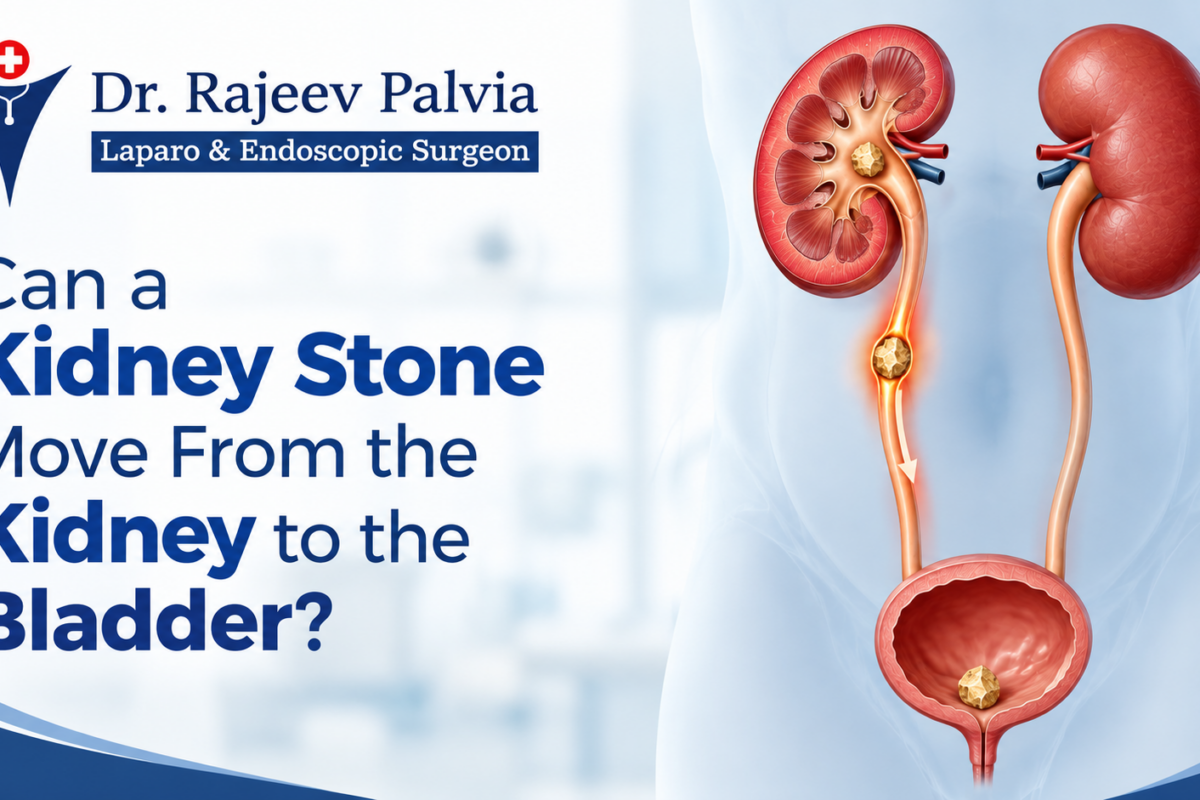
A kidney stone can remain inside the kidney without causing any noticeable symptoms. However, when it begins moving through the urinary tract, it may cause sudden pain and other urinary symptoms. Many people wonder whether a kidney stone can travel from the kidney to the bladder and what happens during this process. Understanding the journey of a stone can help patients recognize warning signs and seek timely medical care. At Kharghar Medicity Hospital, Dr. Rajeev Palvia provides evaluation and treatment for kidney stones in Kharghar, Navi Mumbai.
Where Does a Kidney Stone Start?
Kidney stones are hard deposits formed when certain minerals and substances in urine become highly concentrated and form crystals. Over time, these crystals can grow into stones inside the kidney.
A stone may stay in the kidney for some time without causing pain. Symptoms often begin when it moves from the kidney into the ureter. The ureters are narrow tubes that carry urine from the kidneys to the bladder.
When a stone enters one of these tubes, it can irritate the urinary tract or partially block the flow of urine. This movement is often responsible for the intense pain associated with kidney stones.
Can a Kidney Stone Move From the Kidney to the Bladder?
Yes, a kidney stone can move from the kidney through the ureter and eventually reach the bladder. However, not every stone is able to complete this journey naturally.
Whether a stone can pass depends on factors such as its size, shape and location. Smaller stones may have a greater chance of passing through the urinary tract, while larger stones can become stuck in one of the narrower areas of the ureter.
This is why consulting a Kidney Stone Specialist in Kharghar can be important when symptoms develop. A medical evaluation can help determine the stone’s position and whether observation or treatment may be appropriate.
What Happens When the Stone Enters the Ureter?
The ureter is much narrower than the kidney, so a stone moving through it can cause significant discomfort. Pain may begin in the side or back and travel toward the lower abdomen or groin.
Unlike ordinary muscle pain, kidney stone pain may come in waves as the ureter contracts around the stone. Some people may also experience:
- Nausea or vomiting
- Burning while urinating
- Frequent or urgent urination
- Blood in the urine
- Difficulty passing urine
The severity of pain does not always indicate the exact size of the stone. Even a relatively small stone can cause considerable discomfort if it becomes lodged in a sensitive location.
What Happens When the Stone Reaches the Bladder?
If the stone successfully passes through the ureter, it can enter the bladder. Because the bladder is larger than the ureter, the stone may remain there temporarily before moving toward the urethra and eventually leaving the body during urination.
However, reaching the bladder does not always mean that the problem has completely resolved. The stone still needs to pass out of the urinary tract. Depending on its size and position, this may happen naturally or may require medical treatment.
Patients should therefore continue paying attention to symptoms even if the pain changes or becomes less intense.
Can a Kidney Stone Get Stuck?
Yes. A stone can become lodged at different points along the urinary tract, particularly where the ureter naturally becomes narrower. A stuck stone may obstruct urine flow and cause persistent or severe pain.
Fever, chills, repeated vomiting, difficulty urinating or significant blood in the urine should not be ignored. These symptoms can indicate a complication requiring prompt medical assessment.
A Kidney Stone Specialist in Kharghar can use appropriate diagnostic tests to identify the stone’s location, size and possible effect on urine drainage.
Frequently Asked Questions
1. Can a kidney stone move from the kidney to the bladder?
Yes. A kidney stone can leave the kidney, travel through the ureter and reach the bladder. Its ability to pass naturally depends on factors such as size and location.
2. What does kidney stone movement feel like?
A moving stone may cause sharp or severe pain in the back or side that can spread toward the abdomen or groin. Nausea, urinary discomfort and blood in the urine may also occur.
3. Does reaching the bladder mean the kidney stone is gone?
No. The stone must still pass from the bladder through the urethra. Depending on its size and position, it may pass naturally or require treatment.
4. When should I see a Kidney Stone Specialist in Kharghar?
Seek medical attention for severe or persistent pain, fever, chills, repeated vomiting, difficulty urinating or blood in the urine.
5. Does every kidney stone require surgery?
No. Some stones can pass naturally under medical guidance. Others may need treatment depending on their size, location, symptoms and effect on urine flow.