What is Diabetes? Understanding the Basics
palvia on 26 February, 2026 | Comments Off on What is Diabetes? Understanding the Basics
What is Diabetes? Diabetes Basics Explained
Diabetes basics begin with understanding the meaning of diabetes and how it influences your body’s daily functioning. Diabetes is a health condition in which the body is unable to properly regulate blood sugar (glucose), the main source of energy needed by your cells. Under normal circumstances, a hormone called insulin helps move glucose from the bloodstream into the cells, where it is used to produce energy. However, when a person has diabetes, the body either does not produce enough insulin or cannot use it effectively. As a result, sugar remains in the blood instead of entering the cells.
Over time, high blood sugar levels can affect overall health and may impact organs such as the heart, nerves, kidneys, and eyes. The encouraging part is that understanding diabetes early allows individuals to make informed lifestyle choices and manage the condition effectively. With awareness, healthy habits, and regular monitoring, people with diabetes can continue to live active, balanced, and fulfilling lives.
Diabetes Basics: Difference Between Type 1 and Type 2 Diabetes
Moving forward, it’s important to distinguish between the two main types of diabetes.
-
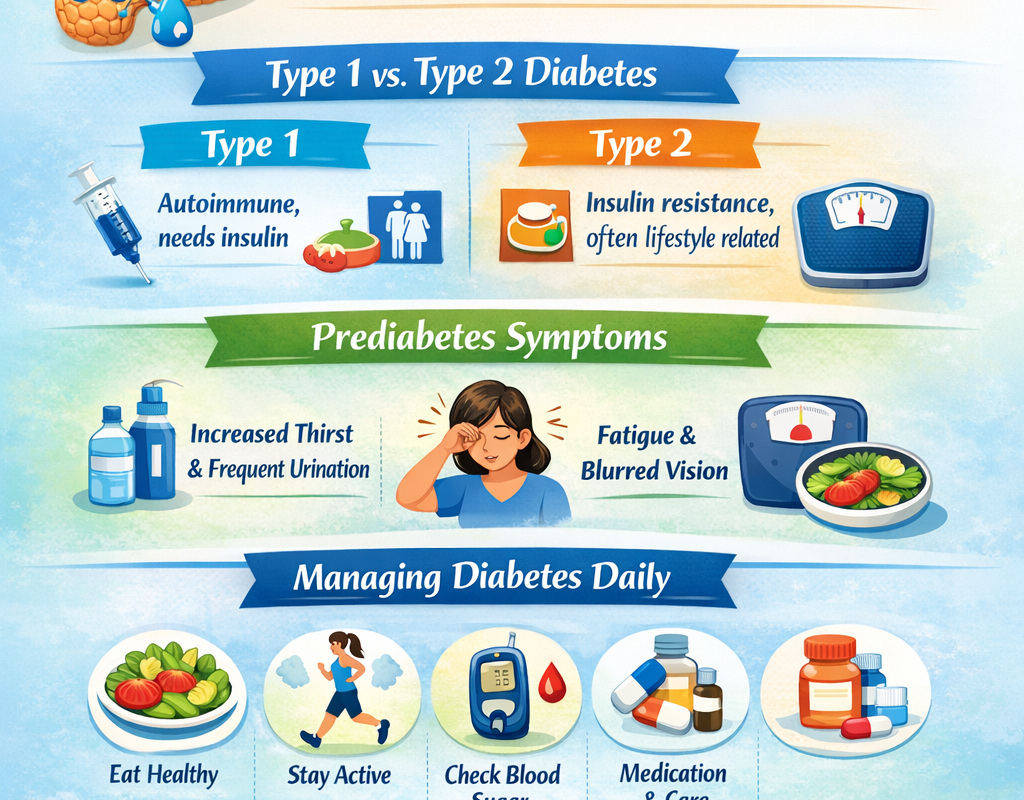
Type 1 Diabetes is an autoimmune condition in which the body attacks insulin-producing cells in the pancreas. It usually develops in children or young adults, and patients require insulin injections to regulate blood sugar.
-
Type 2 Diabetes occurs when the body either becomes resistant to insulin or doesn’t produce enough of it. This type is more common in adults and is often influenced by lifestyle factors such as diet, physical activity, and weight. Management can include lifestyle changes, medications, or insulin therapy.
Causes of Diabetes in Adults
Next, let’s explore what causes diabetes, particularly Type 2 diabetes, in adults. Several factors contribute to its development, including:
-
Genetics – A family history of diabetes increases risk.
-
Lifestyle – Poor diet, sedentary habits, and excess weight can lead to insulin resistance.
-
Age – Risk increases with age, especially after 45.
-
Medical Conditions – High blood pressure, high cholesterol, and other metabolic disorders can increase susceptibility.
Identifying and managing these factors early can help prevent or delay the onset of diabetes.
Top Prediabetes Symptoms Everyone Should Know
Prediabetes is a stage where blood sugar levels are higher than normal but not yet in the diabetic range. Recognizing it early is crucial because it allows you to take preventive steps and reduce the risk of developing type 2 diabetes.
Here are the most common prediabetes symptoms:
-
Increased thirst or frequent urination – Higher blood sugar makes your kidneys work harder to remove excess glucose, which can leave you feeling thirsty and needing to urinate more often.
-
Mild fatigue – When your body cannot efficiently use sugar for energy, you may feel unusually tired even after resting.
-
Slight blurred vision – Fluctuating blood sugar levels can temporarily affect your eyes, causing blurry vision.
-
Unexpected weight changes – Some people notice sudden weight gain or unexplained weight loss due to changes in insulin and blood sugar levels.
Even though these symptoms may seem mild, they serve as early warning signs. Paying attention to them and taking timely action can make a significant difference in preventing diabetes.
How to Keep Your Diabetes Under Control Every Day
Managing diabetes basics doesn’t have to feel complicated. With consistent daily habits and the right guidance, you can maintain healthy blood sugar levels and lead an active, fulfilling life. Here are some key ways to stay in control:
-
Eat a Balanced Diet – Focus on nutrient-rich foods like vegetables, whole grains, and lean proteins while limiting processed sugar. A balanced diet keeps your blood sugar stable and gives you sustained energy throughout the day. For tailored advice, explore Diabetes Management in Kharghar.
-
Stay Physically Active – Exercise helps your body use insulin more effectively. Even simple activities like walking, yoga, or cycling can make a significant difference in blood sugar management and overall well-being.
-
Monitor Your Blood Sugar Regularly – Checking your blood sugar at home helps you understand how your body responds to different foods, activities, and stress. This awareness allows you to make informed choices every day.
-
Follow Medication and Professional Guidance – Some people may need insulin or oral medications to maintain healthy blood sugar. Working with a healthcare provider ensures the right treatment plan for your body. Learn more about Diabetes Management in Navi Mumbai for professional support.
Final Thought : Diabetes Basics for a Healthier Life
Understanding Diabetes basics, managing diabetes starts with awareness and small, consistent daily habits. By paying attention to your diet, staying active, monitoring blood sugar, and following professional guidance, you can take meaningful steps toward better health. With the right support, anyone can live a full, energetic life. Dr. Anjali Palvia emphasizes that taking control today can lead to a healthier, brighter tomorrow.