Waking Up Breathless at Night? Causes, Symptoms & When to See a Doctor
palvia on 19 January, 2026 | No Comments
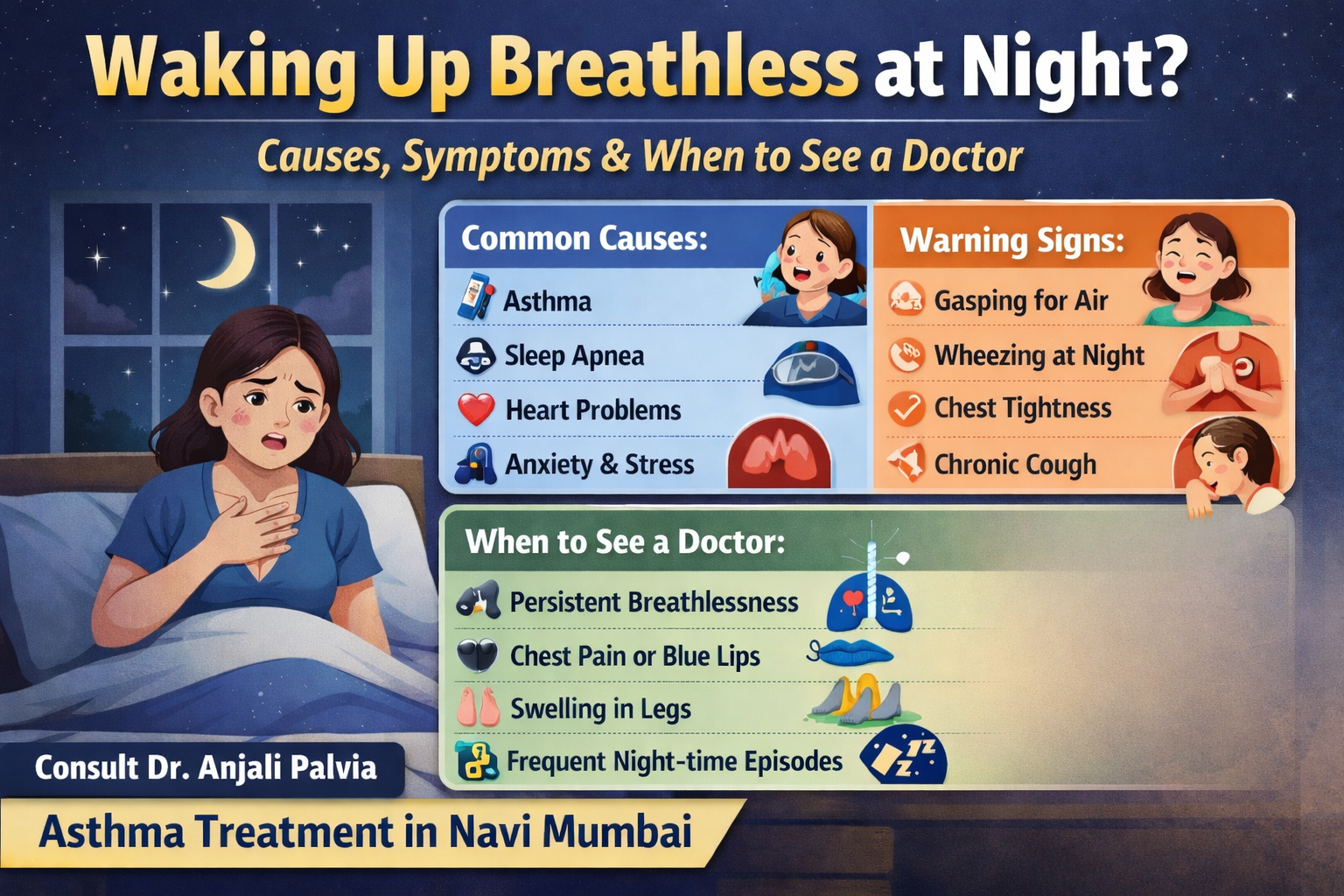
Have you ever woken up in the middle of the night, gasping for air, and wondered, “Is this normal?” If this happens more than once, it’s something you shouldn’t ignore. Night-time breathlessness can be alarming, and understanding why it happens is the first step toward protecting your health.
I spoke with Dr. Anjali Palvia, a trusted consultant physician, and she shared insights on what causes breathlessness at night, how to recognize warning signs, and when it’s time to see a doctor.
Why You Might Be Breathless at Night
There are several reasons why you might find yourself struggling to breathe while sleeping. Let’s break down the most common causes:
1. Asthma
Asthma isn’t just a daytime problem. Many people experience symptoms at night because airways become more sensitive while lying down. You might notice wheezing, chest tightness, or coughing that wakes you up. Dr. Anjali Palvia explains, “Night-time asthma can significantly affect sleep quality, so getting proper evaluation and treatment is crucial.” If you’re in Navi Mumbai, there are specialized options for asthma treatment in Navi Mumbai that can help manage symptoms effectively.
2. Heart Issues
Sometimes, trouble breathing at night isn’t caused by the lungs at all it’s your heart. Conditions like heart failure can cause fluid to build up in the lungs, making it hard to breathe while lying down. This is often accompanied by swelling in the legs or fatigue during the day.
3. Sleep Apnea
Sleep apnea is a condition where your breathing stops and starts repeatedly during sleep. It can lead to sudden awakenings, gasping for air, or loud snoring. While it’s often overlooked, untreated sleep apnea can cause serious health problems over time.
4. Anxiety and Stress
Believe it or not, your mind can affect your breathing. Night-time anxiety or panic attacks can trigger rapid or shallow breathing. These episodes can wake you up and make you feel like you’re suffocating, even if your lungs and heart are healthy.
Signs You Shouldn’t Ignore
Dr. Anjali Palvia advises that you should pay attention to recurring symptoms. Some signs that require immediate medical attention include:
-
Waking up gasping for air
-
Wheezing or whistling while breathing
-
Persistent night-time coughing
-
Chest tightness or discomfort
-
Excessive daytime sleepiness due to poor sleep
Even if your symptoms seem mild, it’s better to be safe. Night-time breathlessness can indicate asthma, heart conditions, or other respiratory problems.
When to See a Doctor
If you notice these signs, it’s time to book an appointment with a healthcare professional. Consulting a consultant physician for asthma in Navi Mumbai can help determine the cause, whether it’s asthma or something else, and recommend an appropriate treatment plan.
Dr. Anjali Palvia emphasizes, “Early intervention can prevent complications and improve your sleep and overall health. Don’t wait until symptoms become severe.”
You should seek immediate medical help if your breathlessness is accompanied by:
-
Chest pain or pressure
-
Blue lips or fingertips
-
Swelling in legs or ankles
-
Severe coughing that interrupts sleep
Managing Night-Time Breathlessness at Home
While professional care is essential, there are steps you can take at home to reduce nighttime breathlessness:
-
Keep your bedroom clean and free from dust and allergens
-
Elevate your head slightly while sleeping
-
Avoid heavy meals, alcohol, or smoking before bed
-
Follow your prescribed medications for asthma, heart conditions, or respiratory issues
-
Practice relaxation techniques like deep breathing or meditation
These measures can complement medical treatment and help you sleep better.
Final Thoughts
Waking up breathless at night isn’t something to brush off. It could be asthma, heart issues, sleep apnea, or even stress. Understanding the causes and recognizing the symptoms early can make all the difference.
If you’re experiencing frequent night-time breathlessness, reach out to Dr. Anjali Palvia reminds us, timely consultation can help you sleep peacefully again while protecting your long-term health.